Featured

What is the Silver Cord in the Bible?

Have you heard the term “silver cord” before? Do you know where it comes from? It’s an interesting term to me because it’s unique. The phrase comes from one single place in history: Ecclesiastes 12:6-7:

“Remember him—before the silver cord is severed, or the golden bowl is broken; before the pitcher is shattered at the spring, or the wheel broken at the well, and the dust returns to the ground it came from, and the spirit returns to God who gave it.” – Ecclesiastes 12:6-7

It doesn’t show up anywhere else in the Bible, and yet it’s the term used to describe many metaphysical studies today: the link between the body and the spirit. What does it mean? We can tell from the verses themselves that it’s being used poetically to describe the process of death. But why a silver cord?

E.W. Bullinger’s Companion Bible describes each of these elements via comparing them to actual body parts:

the silver cord: i.e. the spinal cord.

the golden bowl: i.e. the head, or skull.

pitcher: the failure of the heart.

Commentaries typically make similar assertions and leave it at that. However, I think that this is too much of a scholarly explanation, and lacks the powerful, poetic message of Christ. There is more to the silver cord due to the simple fact that it’s different from the rest. Consider the following:

  1. When a wheel is broken at a well, it is useless and everything stops. No water can come up, and everything falls down
  2. When a pitcher shatters at the spring, the water falls down
  3. When a golden bowl is broken, whatever it was holding falls down
  4. When a silver cord is severed, one side stays up, and the other side falls down

(The above image is from Superman IV: The Quest for Peace, where his hair is in a museum holding up a weighted ball)

Solomon said that the dust returns to the ground it came from, and the spirit returns to God who gave it. The silver cord is the only item in the list that has two sides: it binds and it looses, one side goes away and the other side remains. So we know that it is specifically focused on the connection between the body and the spirit. But why is it silver? Shouldn’t the spirit be more valuable than our bodies? Why would a golden bowl be used to describe our body, when our spirit is eternal? Since this term was invented by the culture of the time of Solomon, lets engage with his language and his culture.

Silver & the Appointed Time

The word “silver” used by Solomon in Hebrew is kesef (כֶּסֶף). This word is derived from the Assyrian word kaspu (ܟ݁ܶܣܦ݁ܳܐ), which means “pale metal.” 1

What makes this special is that there is another word in the Bible that shares this same root word. This word is keseh (כֶּסֶא), which means “full moon,” “pale moonlight,” or “appointed time.” Keseh is very unique, as it is a hapax legomenon, a word that only occurs once in the entire Bible. Where does it occur?

My husband is not at home; he has gone on a long journey.

He took his purse filled with money and will not be home until the appointed time.

With persuasive words she led him astray; she seduced him with her smooth talk. – Proverbs 7:19-21

Depending on the translation you read, the highlighted words will say full moon, or appointed time. This will depend on how a given translation treats literal word-for-word translation versus original author intent. What if the woman’s husband came home early? His appointed time would certainly have turned into an hour of reckoning. We understand the literal word for “full moon” here to mean that it is the appointed time, or the hour of reckoning. Passover, for example, always begins on the 15th day of the Hebrew month of Nisan, which lines up with the lunar cycle and guarantees that a full moon will be present every time. Passover is a time to remember the hour of reckoning for Egypt, the appointed time when God would deliver his people out of slavery. A full moon is highly significant in Jewish culture, and many other traditions surround it.

So, what does the connection between silver and the “appointed time” mean? It helps us understand why the silver cord is not made out of gold. Silver, a pale metal as the Assyrians would describe, is a much smaller denomination of currency than gold. Gold is something that the average person at that time would have never touched. Gold was used to fund wars, vast building projects, and to pay kings. A debt of gold is especially burdensome, and Jesus compares the debt of sin owed to God to ten thousand bags of gold:

Therefore, the kingdom of heaven is like a king who wanted to settle accounts with his servants. As he began the settlement, a man who owed him ten thousand bags of gold was brought to him. Since he was not able to pay, the master ordered that he and his wife and his children and all that he had be sold to repay the debt.

At this the servant fell on his knees before him. “Be patient with me,” he begged, “and I will pay back everything.” The servant’s master took pity on him, canceled the debt and let him go.

But when that servant went out, he found one of his fellow servants who owed him a hundred silver coins. He grabbed him and began to choke him. “Pay back what you owe me!” he demanded. – Matthew 18:23-28

Silver, on the other hand, is an order of magnitude lower in value than gold. See how the servant has other people owing him merely silver? The difference is our debt of sin to God compared to our earthly debts with our neighbors. Silver is of mortal concern, debts we make with one another on earth. Silver is used to buy or rent smaller things, temporary things that come and go, like a field:

Abraham agreed to Ephron’s terms and weighed out for him the price he had named in the hearing of the Hittites: four hundred shekels of silver. – Genesis 23:16

Or information:

Judas asked, “How much will you pay me to betray Jesus to you?” And they gave him thirty pieces of silver. – Matthew 26:15

Or people:

So when the Ishmaelites, who were Midianite traders, came by, Joseph’s brothers pulled him out of the cistern and sold him to them for twenty pieces of silver. And the traders took him to Egypt. – Genesis 37:28

Silver is used to signify our fleeting life, a pale metal, a memorial for something greater. God used silver trumpets to call the Israelites during any possible time, even times when the moon wasn’t present:

The Lord said to Moses: “Make two trumpets of hammered silver, and use them for calling the community together and for having the camps set out.” – Numbers 10:1-2

“Also at your times of rejoicing—your appointed festivals and New Moon feasts—you are to sound the trumpets over your burnt offerings and fellowship offerings, and they will be a memorial for you before your God. I am the Lord your God.” – Numbers 10:10

We see these silver trumpets foreshadowing the final return of Jesus, the day of reckoning, when the spirits of Christians are returned to God, and the silver cord is severed:

Then will appear the sign of the Son of Man in heaven. And then all the peoples of the earth will mourn when they see the Son of Man coming on the clouds of heaven, with power and great glory. And he will send his angels with a loud trumpet call, and they will gather his elect from the four winds, from one end of the heavens to the other. – Matthew 24:30-31

Conclusion

Throughout scripture we see a pattern of silver being used to signify things that are borrowed, things that are temporarily in our possession. While we live, our bodies and spirits are connected through the silver cord. But we must remember God. God gave the Israelites silver trumpets to be used as a memorial of all he has done for them, and to call them out of the wilderness. One day, Christians will be called with the same silver trumpets to return to God what is owned by God: our spirits. Our spirits belong to him, and will return to him when we die.

When the silver cord is severed, everything we owe to God will be reckoned. Our bodies belong to the dust, and our spirits belong to God. Remember that your life is borrowed from God, and we owe him an unsurmountable debt due to our sinful lives. And yet, Jesus paid the same debt in the parable, ten thousand bags of gold, with his very life so that we could be free.

The silver cord serves as a reminder of who we as Christians belong to, how fleeting and pale our lives and possessions are, and how we should be desperately forgiving those who are indebted to us:

“Then the master called the servant in. ‘You wicked servant,’ he said, ‘I canceled all that debt of yours because you begged me to. Shouldn’t you have had mercy on your fellow servant just as I had on you?’ In anger his master handed him over to the jailers to be tortured, until he should pay back all he owed.

This is how my heavenly Father will treat each of you unless you forgive your brother or sister from your heart.” – Matthew 18:32-35

If you’re not sure where to begin with forgiving other people, Jesus gives us a simple answer: we should pray. Pray and remember God before the silver cord is severed.

“This, then, is how you should pray:

‘Our Father in heaven, hallowed be your name, your kingdom come, your will be done, on earth as it is in heaven.

Give us today our daily bread. And forgive us our debts, as we also have forgiven our debtors. And lead us not into temptation, but deliver us from the evil one.'”

– Matthew 6:9-13

1. The Brown-Driver-Briggs Hebrew and English Lexicon (Peabody, MA: Hendrickson Publishers, 2003) p. 493.


The Ark of the Covenant in the New Testament

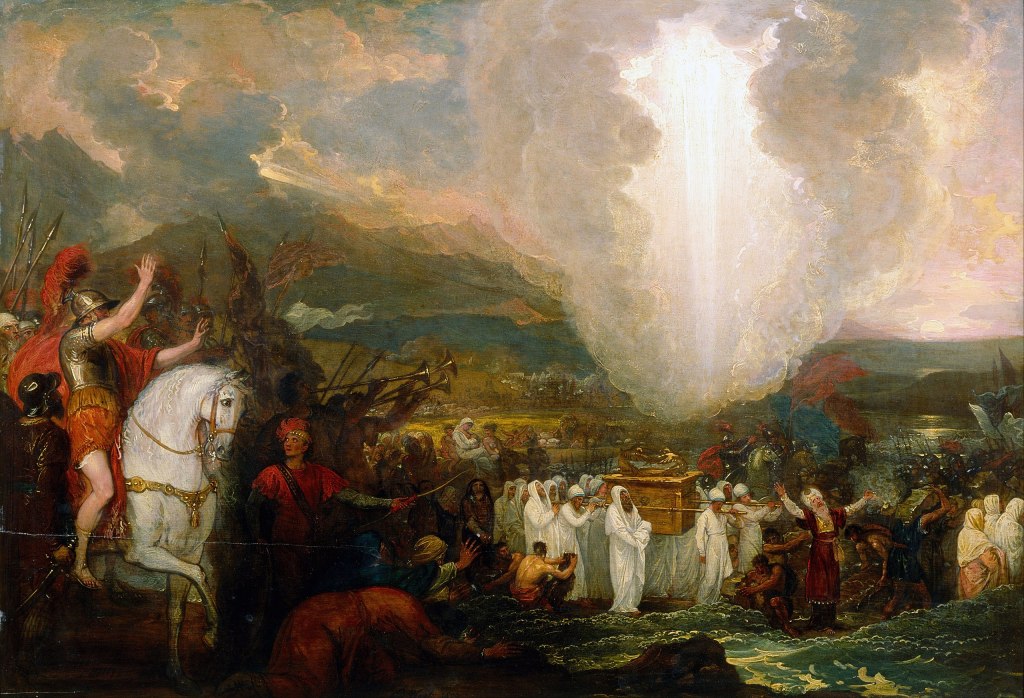
Joshua passing the River Jordan with the Ark of the Covenant by Benjamin West, 1800

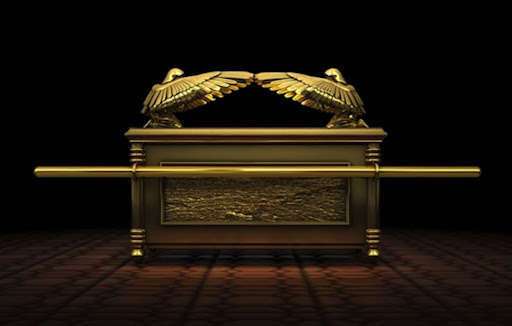
The Ark of the Covenant symbolized the covenant God made with Israel. It contained the two tablets of the law, Aaron’s staff, and a jar of manna. But its real significance and usage was with the lid. The lid was called the “mercy seat” and is where the iconic pair of winged Cherubim sat. Once a year the high priest would enter the holy of holies and sprinkle the blood of animals seven times on the lid. This atonement was done on Yom Kippur and appeased God’s judgement for our sins. But the real question is if it was so important, what happened to it?

The last mention of the Ark of the Covenant in the Old Testament is found here:

Put the holy ark in the house that Solomon the son of David, king of Israel, built. You need not carry it on your shoulders. Now serve the Lord your God and his people Israel. – 2 Chronicles 35:3

Any commentaries you read will find the Ark’s ultimate fate inconclusive, and most will say that Nebuchadnezzar plundered it or it’s buried in ruins. But was it really lost? Does the Bible really provide zero closure for such a monumental relic? I believe the answer is quite simple and everything we need to know is in the verse above. We don’t need a theology degree to know what God is telling us here, and where the Ark of the Covenant is in the New Testament.

So where is it?

We have three hints given to us from the passage above:

  • The Ark is in God’s house
  • The Ark is no longer a burden to the people
  • God desires obedience over sacrifice

In a vision, we see in the New Testament confirmation that the Ark is indeed in God’s house:

Then God’s temple in heaven was opened, and within his temple was seen the ark of his covenant. And there came flashes of lightning, rumblings, peals of thunder, an earthquake and a severe hailstorm. – Revelation 11:19

But what’s really interesting is the man who claimed a similar thing:

“Why were you searching for me?” Jesus asked. “Didn’t you know I had to be in my Father’s house?” – Luke 2:49

Likewise, God telling us in the Old Testament that the Israelites didn’t need to carry the Ark anymore is a powerful turning point. The Israelites were used to the burden of the Ark. It was an incredibly dangerous artifact:

When they came to the threshing floor of Nakon, Uzzah reached out and took hold of the ark of God, because the oxen stumbled. The Lord’s anger burned against Uzzah because of his irreverent act; therefore God struck him down, and he died there beside the ark of God. – 2 Samuel 6:6-7

For simply touching the Ark, God killed Uzzah. You can imagine how nervous and cautious people had to be whenever they were around it. Yet now God is saying that no one has to carry it on their shoulders anymore. This was a great and deadly burden lifted from the Israelites. In the New Testament, only one man ever lifted our burden of the law:

“For my yoke is easy and my burden is light.” – Matthew 11:30

Finally, the last part of the verse from 2 Chronicles says “Now serve the Lord your God and his people Israel.” In the New Testament we find this command repeated many times:

“Never be lacking in zeal, but keep your spiritual fervor, serving the Lord. Be joyful in hope, patient in affliction, faithful in prayer. Share with the Lord’s people who are in need. Practice hospitality.” – Romans 12:11-13

“You, my brothers and sisters, were called to be free. But do not use your freedom to indulge the flesh; rather, serve one another humbly in love.” – Galatians 5:13

“God is not unjust; he will not forget your work and the love you have shown him as you have helped his people and continue to help them.” – Hebrews 6:10

Who fulfilled this command perfectly? Who served both God and God’s people without failing once?

“For I have come down from heaven not to do my will but to do the will of him who sent me.” – John 6:38

“I was sent only to the lost sheep of the house of Israel.” – Mathew 15:24

“For I tell you that Christ has become a servant of the Jews on behalf of God’s truth, so that the promises made to the patriarchs might be confirmed.” – Romans 15:8

Part of this promise to the patriarchs is that the Ark of the Covenant would no longer be a burden, that is, that the law would not be a burden anymore. You might have already connected the dots here, but if you haven’t, I believe that the New Testament very clearly shows Jesus as being the new Ark of the Covenant. All the evidence we need lies in Jesus’ tomb:

Now Mary stood outside the tomb crying. As she wept, she bent over to look into the tomb and saw two angels in white, seated where Jesus’ body had been, one at the head and the other at the foot. – John 20:11-12

Why would John specifically identify the location of the angels? They were on either side of where Jesus’ body had been, in the exact same formation as the Cherubim on the Ark of the Covenant:

On this mercy seat in the tomb, Jesus’ blood was spilled once and for all, between the Cherubim. This is how God chose to speak to Moses, and today, it’s how Jesus speaks to us:

When Moses entered the tent of meeting to speak with the Lord, he heard the voice speaking to him from between the two cherubim above the atonement cover on the ark of the covenant law. In this way the Lord spoke to him. – Number 7:89

How is it possible for the Ark of the Covenant to be connected to Jesus, and spiritual matters today? How could Jesus’ sacrifice have been enough to do away with the old practices of Yom Kippur and the regular animal sacrifices? The New Testament makes this very clear:

He said, “This is the blood of the covenant, which God has commanded you to keep.” In the same way, he sprinkled with the blood both the tabernacle and everything used in its ceremonies. In fact, the law requires that nearly everything be cleansed with blood, and without the shedding of blood there is no forgiveness.

It was necessary, then, for the copies of the heavenly things to be purified with these sacrifices, but the heavenly things themselves with better sacrifices than these. 

For Christ did not enter a sanctuary made with human hands that was only a copy of the true one; he entered heaven itself, now to appear for us in God’s presence. Nor did he enter heaven to offer himself again and again, the way the high priest enters the Most Holy Place every year with blood that is not his own. Otherwise Christ would have had to suffer many times since the creation of the world. 

But he has appeared once for all at the culmination of the ages to do away with sin by the sacrifice of himself. Just as people are destined to die once, and after that to face judgment, so Christ was sacrificed once to take away the sins of many; and he will appear a second time, not to bear sin, but to bring salvation to those who are waiting for him. – Hebrews 9:20-28

Jesus is the true Ark of the Covenant. The one we see in the Old Testament was a copy of a heavenly thing, and it symbolized God’s mercy but also the burden of the law. Jesus is the true heavenly image of God. He dwells in his Father’s house, he takes away our burdens, and he asks that we serve God and those around us.

This is love: not that we loved God, but that he loved us and sent his Son as an atoning sacrifice for our sins. – 1 John 4:10

The Ark of the Covenant was never a box, it is a man:

“He is the image of the invisible God.” – Colossians 1:15

“The Son is the radiance of God’s glory and the exact representation of his being, sustaining all things by his powerful word.” – Hebrews 1:3

“Christ is the power of God and the wisdom of God.” – 1 Corinthians 1:24

Then Hezekiah prayed before the LORD, and said: “O LORD God of Israel, the One who dwells between the cherubim, You are God, You alone, of all the kingdoms of the earth. You have made heaven and earth.” – 2 Kings 19:15

The Darkness of God

There are times when I feel like I’ve figured God out and there’s nothing left to learn, like I’ve read the Bible enough times and it can’t have anything left to offer. But then God shows a new piece of himself, and he’s so much bigger than I could ever imagine, and I feel so small. This happened again to me recently, and I see once more how I know almost nothing about God. He is so far beyond my understanding. This time when it happened it was all about the darkness of God. I was reading the introduction to Smoke on the Mountain by Joy Davidman, C.S. Lewis’ wife, and it begins with a verse from Exodus:

Moses said to the people, “Do not be afraid. God has come to test you, so that the fear of God will be with you to keep you from sinning.”

The people remained at a distance, while Moses approached the thick darkness where God was.

– Exodus 20:20-21

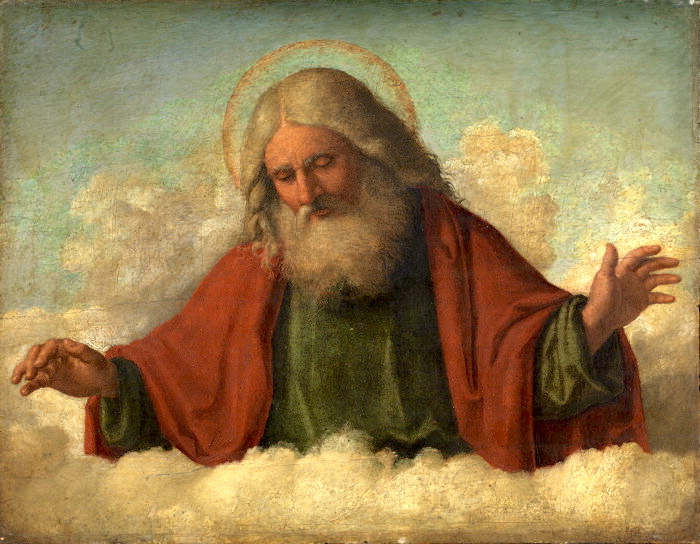
Have you ever thought about God as being in darkness? I never thought about it that much before. In traditional art, God is always depicted as light, and surrounded by light, never darkness. We were always taught that God is light.

But here it is, descriptions of darkness. As I looked further, the more I found in the Bible placing God in darkness:

Clouds and thick darkness are all around him; righteousness and justice are the foundation of his throne. – Psalm 97:2

As the sun was setting, Abram fell into a deep sleep, and a thick and dreadful darkness came over him. Then the Lord spoke. – Genesis 15:12

He parted the heavens and came down; dark clouds were under his feet. He mounted the cherubim and flew; he soared on the wings of the wind. He made darkness his covering, his canopy around him—the dark rain clouds of the sky. Out of the brightness of his presence clouds advanced, with hailstones and bolts of lightning. – Psalm 18:9-12

He who dwells in the shelter of the Most High will abide in the shadow of the Almighty. – Psalm 91:1

Woe to you who desire the day of the Lord! Why would you have the day of the Lord? It is darkness, and not light. Is not the day of the Lord darkness, and not light, and gloom with no brightness in it? ‭‭- Amos‬ ‭5‬:‭18‬-20‬

Why is this? How can God be light and yet surrounded by darkness? How can the day of the Lord be darkness? You will find many commentaries and theologians who try to answer this question with logic. You’ll find these reasons:

  1. God’s darkness is a metaphor for his wrath and judgement
  2. God’s darkness is meant to shield us from his full glory, which would destroy us because of our sin
  3. God’s darkness simply represents good and evil, where anything apart from God is darkness and sin

These explanations are fine ideas, but they’re not the whole truth, and scripture itself says otherwise to these oversimplifications of God. Let’s walk through each one:

Is God’s darkness a metaphor?

The people remained at a distance, while Moses approached the thick darkness where God was.

– Exodus 20:21

This is not a metaphor. This is a simple historical recount of the situation. So while it can be a metaphor in some other contexts, God is simply surrounded by real, literal darkness in this example when his presence was near the Israelites. So this explanation is not a full answer.

Is God’s darkness necessary to shield us from his glory?

And the Word became flesh and dwelt among us, and we have seen his glory, glory as of the only Son from the Father, full of grace and truth. – John 1:14

We see here that God does not hide his glory from Christians. And in fact, Jesus goes further with this:

Anyone who has seen Me has seen the Father. – John 14:9

However, this claim about God’s darkness is neither completely correct or completely wrong, because we know that God’s darkness as a spiritual metaphor is indeed used to blind unbelievers from seeing his glory:

The god of this age has blinded the minds of unbelievers, so that they cannot see the light of the gospel that displays the glory of Christ, who is the image of God. – 2 Corinthians 4:4

So this claim is also not the whole answer.

Is God’s light and darkness purely symbolic of good and evil?

For you are not a God who delights in wickedness; evil may not dwell with you. – Psalm 5:4

The darkness of God is not simply symbolic of evil, because he does not wrap himself in wickedness. Evil may not dwell with him.

What does this all mean?

It seems as though God’s darkness can be a metaphor sometimes, a literal and physical darkness other times, and symbolic of morality other times. So what? How do we know what it really is, and why does it seem like there’s conflicting reasons?

The answer to this question is, ultimately, quite simple. I can imagine Jesus giving us the same answer he gave when someone asked about marriage after the resurrection:

Jesus replied, “You are in error because you do not know the Scriptures or the power of God.” – Matthew 22:29

When we ask what the specific nature of God’s darkness is, we are in error because we do not know the full power of God. If God dwells in darkness, doesn’t that mean all of our images of him are wrong? Doesn’t that mean that God is capable of being so much more than we ever imagined? Doesn’t that mean that we have sinned and broken the second commandment by believing that we’ve created accurate illustrations of God’s nature?

You shall not make for yourself an image in the form of anything in heaven above or on the earth beneath or in the waters below. – Exodus 20:4

If the whole point of this post can be summed up in a single statement, it’s that I have been greatly humbled by seeing scripture depicting the darkness of God. I realize that I know almost nothing about the true nature of the almighty God, and the only way to know him more is through the glory of Jesus indwelling in us as Christians.

For God, who said, “Let light shine out of darkness,” made his light shine in our hearts to give us the light of the knowledge of God’s glory displayed in the face of Christ. – 2 Corinthians 4:6

God is so much bigger than anything we could possibly imagine. I can confidently say that I don’t know the answer to what God’s darkness really is, and we should be careful with oversimplified explanations of his nature.

I form the light, and create darkness: I make peace, and create evil: I the Lord do all these things. – Isaiah 45:7

I hope that after reading these passages from scripture, he’s gotten a lot bigger for you, too. At the very least, God’s darkness is good.

You, God, are my God, earnestly I seek you; I thirst for you, my whole being longs for you, in a dry and parched land where there is no water.

I have seen you in the sanctuary and beheld your power and your glory. Because your love is better than life, my lips will glorify you. I will praise you as long as I live, and in your name I will lift up my hands.I will be fully satisfied as with the richest of foods; with singing lips my mouth will praise you.

On my bed I remember you; I think of you through the watches of the night. Because you are my help, I sing in the shadow of your wings. I cling to you; your right hand upholds me. – Psalm 63:1-8

Alexamenos is Faithful

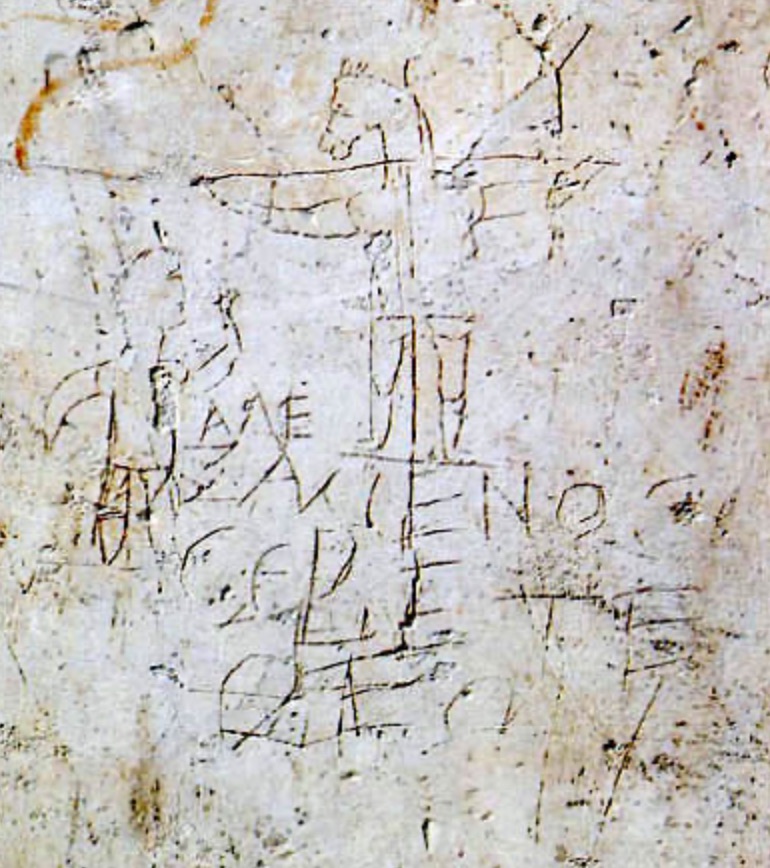
Between the 1st and 2nd century AD, the Romans taunted Christians by accusing them of worshipping a donkey. This was called Onolatry1.

In 1857, the domus Gelotiana was unearthed in Rome, a building that was used by Emperor Caligula as an imperial palace, then it became an imperial boarding school, and then as simple support for new buildings, being buried for nearly two thousand years. Inside the buried building, ancient graffiti was found mocking a Roman soldier named Alexamenos2:

The Alexamenos graffito
Expanded stone rubbing trace of the original

Next to the crucified donkey is Alexamenos, and the description below them says:

ALE XAMENOS ϹΕΒΕΤΕ THEON (original crude Greek with phonetic misspelling)

Ἀλεξάμενος σέβεται θεόν (Proper Greek translation)

Alexamenos worships his god (English translation)

A mocking commentary of the image. Yet, the beauty of this imagery is in what was written in the next chamber of the room. This is added to the stone trace image above to the right, in different handwriting:

ΑΛΕΞΑΜΕΝΟϹ FIDELIS

Alexamenos is faithful

A simple retort to an insult written in stone. So, why is this important? It’s true that we know nothing more about Alexamenos, he was not a character in the Bible, we don’t know who the original author of the graffiti was, and this discovery is not some magical “evidence” that will prove Jesus’ existence to the world. So, what is it then? It is a simple and solemn confirmation of Jesus’ promise:

Blessed are you when people insult you, persecute you and falsely say all kinds of evil against you because of me. Rejoice and be glad, because great is your reward in heaven, for in the same way they persecuted the prophets who were before you. – Matthew 5:11-12

We don’t know much about Alexamenos, but we know that Onolatry was an insult, and we know that whoever he was, he was called faithful. We don’t even know if Alexamenos was actually faithful or not, if he wrote the retort himself to protect his reputation, or if he was even a Christian3, but God remains through the test of time. No matter who Alexamenos was, the truth of scripture remains:

Live such good lives among the pagans that, thought they accuse you of doing wrong, they may see your good deeds and glorify God on the day he visits us. – 1 Peter 2:12

Instead of an insult, the graffiti is an opportunity to bear witness:

But before all this they will lay their hands on you and persecute you, delivering you up to the synagogues and prisons, and you will be brought before kings and governors for my name’s sake. This will be your opportunity to bear witness. – Luke 21:12-13

Persecution is one of the most powerful confirmations of our personal faith. It can be argued that if Alexamenos had not made it evident enough that he was faithful to Jesus, there would have been no insult needed. And the retort given on the second chamber wall is so effective, and not a great defense with a counter-insult or anything, but a simple and calm statement.

One who is faithful in a very little is also faithful in much, and one who is dishonest in a very little is also dishonest in much. – Luke 16:10

But this is not true of my servant Moses; he is faithful in all my house. – Numbers 12:7

At this, the administrators and the satraps tried to find grounds for charges against Daniel in his conduct of government affairs, but they were unable to do so. They could find no corruption in him, because he was faithful and no error or fault was found in him. – Daniel 6:4

I know where you live—where Satan has his throne. Yet you remain true to my name. You did not renounce your faith in me, not even in the days of Antipas, my faithful witness, who was put to death in your city—where Satan lives. – Revelations 2:13

For the sake of Christ, then, I am content with weaknesses, insults, hardships, persecutions, and calamities. For when I am weak, then I am strong. – 2 Corinthians 12:10

This short story about Alexamenos is a simple message and a reminder of the value of faith. Persecution, while painful, is confirmation of our faith and our salvation from God. And God will bless us in this persecution. I wanted to end this post with my own experience seeing ancient graffiti in Rome, and finally a prayer from Psalm, as encouragement during our persecution, and thanksgiving of Christ’s love for us.

Graffiti at the Colosseum

If you ever visit the Colosseum in Rome, I recommend looking out for something that’s very easy to miss. Thousands of Christians were persecuted and killed in the Colosseum by the Roman Empire. But the Roman attempt to destroy the message of Christ lies in ruins, and a simple yet powerful image remains. I took this picture during one of my visits, it’s located at the top of one of the archways you can walk under in the Colosseum.

A seemingly normal archway at the Colosseum
Zooming in on the left side reveals a peculiar image

Take this image however you like, some may say that it’s simply depicting the common crucifixion practice and means nothing else. But I believe that no matter what, it’s a reminder to Christians walking beneath it today of Christ’s sacrifice, the persecution of martyrs, and the evidence of our personal salvation.

Alexamenos is faithful.

Rulers persecute me without cause,
    but my heart trembles at your word.
I rejoice in your promise
    like one who finds great spoil.
I hate and detest falsehood
    but I love your law.
Seven times a day I praise you
    for your righteous laws.
Great peace have those who love your law,
    and nothing can make them stumble.
I wait for your salvation, Lord,
    and I follow your commands.
I obey your statutes,
    for I love them greatly.
I obey your precepts and your statutes,
    for all my ways are known to you. – Psalm 119:161-168

Footnotes

  1. Hassett, M. (1907). “The Ass (in Caricature of Christian Beliefs and Practices)”. The Catholic Encyclopedia. Robert Appleton Company. ↩︎
  2. Everett Ferguson, Backgrounds of Early Christianity (Grand Rapids: Eerdmans, 1987, 2d ed. 1993), 475-76, 2d ed. = 559-61 ↩︎
  3. Graydon F. Snyder, Ante Pacem: Archaeological Evidence of Church Life Before Constantine (Mercer Univ. Press, 1985), 27-28 ↩︎

Judas in the Old Testament

Gustave Doré – Judah Defeats Moab and Ammon (1832–1883)

Are you a fake Christian? Jesus warns us very plainly that there will be people who do good works, perform miracles, and prophesy, who will still go to hell:

Many will say to me on that day, “Lord, Lord, did we not prophesy in your name and in your name drive out demons and in your name perform many miracles?”

Then I will tell them plainly, “I never knew you. Away from me, you evildoers!” – Matthew 7:22-23

This is a profoundly somber thing for Jesus to say. You can call Jesus your Lord and perform miracles and yet Jesus will still reject you in the end. Why is this possible? What’s missing? How can you know if you’re a fake Christian, professing your allegiance to God and doing great things in his name, and yet not have salvation?

Judas Iscariot shows us one way being a fake Christian is possible in the New Testament. He was one of God’s chosen disciples. For three years he walked with Jesus, was involved in Jesus’ ministry, and was given authority over spirits:

“Nevertheless, do not rejoice in this, that the spirits are subject to you, but rejoice that your names are written in heaven.” – Luke 10:20

And Judas was flawed just like the rest of the disciples. His sins were not unique. He was a thief:

Judas did not say this because he cared about the poor but because he was a thief; as keeper of the money bag, he used to help himself to what was put into it. – John 12:6

He was greedy:

When Judas Iscariot bargained with the leaders of Israel for the betrayal of Jesus, he asked, “What are you willing to give me if I deliver him to you?” The leaders then counted out a mere “thirty pieces of silver.” Matthew 26:15

But the rest of the disciples were deeply flawed and sinful as well. For example, Peter betrayed Jesus three times, and Thomas refused to believe by faith alone that Jesus was even resurrected. So what’s the difference here? Why were they all saved and Judas condemned? The title of this topic is Judas in the Old Testament. This means that we’re looking for someone who looks just like Judas, in order to give us another perspective on what a fake Christian can look like, what the warning signs are, and what we should do to make sure that Jesus knows who we are after we die. So, who went through the same things as Judas in the Old Testament?

Balaam

If you were to consult biblical commentaries on the topic of Judas in the Old Testament, you will likely be pointed towards all of the various prophecies Judas fulfilled concerning the betrayal of Jesus. But you will probably never be pointed towards Balaam. Balaam is a fascinating person. In the New Testament, we don’t get to see the miracles or spiritual authority of Judas, only the sin, betrayal, guilt, and suicide. But we get to see Balaam acting as a prophet of the almighty God. We see Balaam struggle through following God’s will, eventually speaking God’s blessings upon Israel, and then ultimately betraying Israel through greed, ending in his death. Who ever heard of a prophet, who speaks directly with God, betraying Israel? Well, who ever heard of a disciple, who walks with Jesus Christ himself, betraying the Son of Man for a mere 30 pieces of silver? Who is a better example of a fake Christian than this?

Let’s dive into the direct parallels, which will help reveal the mind of Judas through Balaam, and hopefully help us with our own introspection of our relationship with God.

They Were Both Introduced as Wicked

Judas is actually not mentioned as much as you’d think in the Bible. But every time he is mentioned, the authors don’t ever want you to forget that he was a traitor and a thief. Here are a couple mentions of Judas in different books:

Simon the Zealot and Judas Iscariot, who betrayed him. – Matthew 10:4

But one of his disciples, Judas Iscariot, who was later to betray him, objected. – John 12:4

He did not say this because he cared about the poor but because he was a thief; as keeper of the money bag, he used to help himself to what was put into it. – John 12:6

Now let’s look at Balaam’s introduction:

Balak son of Zippor, who was king of Moab at that time, sent messengers to summon Balaam son of Beor, who was at Pethor, near the Euphrates River, in his native land. Balak said:

“A people has come out of Egypt; they cover the face of the land and have settled next to me. Now come and put a curse on these people, because they are too powerful for me. Perhaps then I will be able to defeat them and drive them out of the land. For I know that whoever you bless is blessed, and whoever you curse is cursed.”

The elders of Moab and Midian left, taking with them the fee for divination. When they came to Balaam, they told him what Balak had said. – Numbers 22:4-7

It’s easy to skim through the details in the book of Numbers, but you’ll miss something abominable: divination:

Let no one be found among you who sacrifices their son or daughter in the fire, who practices divination or sorcery, interprets omens, engages in witchcraft, or casts spells, or who is a medium or spiritist or who consults the dead. Anyone who does these things is detestable to the Lord; because of these same detestable practices the Lord your God will drive out those nations before you. – Deuteronomy 18:10-12

Balaam is immediately introduced as someone who is paid for the wicked service of divination. His livelihood is detestable to God. What a great introduction!

They Both Shared in the Ministry

Judas was one of the disciples. All of the authority and blessings that Jesus gave to his followers, Judas received:

Judas was one of us and shared in the ministry with us. – Acts 1:17

Judas did something that you and I simply can’t do, which is speak directly with Jesus during his short time on earth. Balaam also did something that many people wish they could do, which is speak directly with God regularly:

God came to Balaam and asked, “Who are these men with you?” – Numbers 22:9

That night God came to Balaam and said, “Since these men have come to summon you, go with them, but do only what I tell you.” – Numbers 22:20

The angel of the Lord said to Balaam, “Go with the men, but speak only what I tell you.” So Balaam went with Balak’s officials. – Numbers 22:35

The Lord put a word in Balaam’s mouth and said, “Go back to Balak and give him this word.” – Numbers 23:5

When Balaam looked out and saw Israel encamped tribe by tribe, the Spirit of God came on him and he spoke his message. – Numbers 24:2-3

The crazy thing about this is that God speaks with Balaam who is neither an Israelite, a high priest, or following any of Moses’ procedures. Balaam is a pagan who practices divination for profit. Likewise, Jesus chose Judas, who was a thief and a sinner, to follow him. God frequently calls us out of sin and into his purposes.

They Both Received Warnings

Judas is given warnings by Jesus before the betrayal:

“The Son of Man will go just as it is written about him. But woe to that man who betrays the Son of Man! It would be better for him if he had not been born.” – Matthew 26:24

Likewise, Balaam is warned by God when he begins to go down the wrong path. Balaam’s donkey see’s the angel of the Lord and tries to stop Balaam three different times:

Then the Lord opened Balaam’s eyes, and he saw the angel of the Lord standing in the road with his sword drawn. So he bowed low and fell facedown.

The angel of the Lord asked him, “Why have you beaten your donkey these three times? I have come here to oppose you because your path is a reckless one before me. The donkey saw me and turned away from me these three times. If it had not turned away, I would certainly have killed you by now, but I would have spared it.” – Numbers 22:31-33

They Both Couldn’t Ruin God’s Plan

The third thing that Balaam shares with Judas is the inability to interfere with God’s plan. Jesus’ betrayal was necessary for his sacrifice, and he was planning on it happening:

Jesus replied, “The one who has dipped his hand into the bowl with me will betray me.” – Matthew 26:23

As soon as Judas took the bread, Satan entered into him.

So Jesus told him, “What you are about to do, do quickly.”

But no one at the meal understood why Jesus said this to him. Since Judas had charge of the money, some thought Jesus was telling him to buy what was needed for the festival, or to give something to the poor. As soon as Judas had taken the bread, he went out. And it was night. – John 13:27-30

Likewise, God the Father had blessed the nation of Israel in the Old Testament, and he would not allow Balaam to curse Israel on King Balak’s request:

Then Balak’s anger burned against Balaam. He struck his hands together and said to him, “I summoned you to curse my enemies, but you have blessed them these three times. Now leave at once and go home! I said I would reward you handsomely, but the Lord has kept you from being rewarded.”

Balaam answered Balak, “Did I not tell the messengers you sent me, ‘Even if Balak gave me all the silver and gold in his palace, I could not do anything of my own accord, good or bad, to go beyond the command of the Lord—and I must say only what the Lord says’?” – Numbers 24:10-13

Although Judas may have thought he was taking things into his own hands, his betrayal was already foretold and was exactly what God had planned. Likewise, while Balaam may have wanted to curse Israel for profit, he was completely unable to do so.

They Both Lacked Faith in God

While Judas can be compared to Peter, as they both betray Jesus and come from a history of sin, Peter turns to Jesus in repentance, while Judas turns to the temple priests for forgiveness, which is something the priests can’t do for him:

When Judas, who had betrayed him, saw that Jesus was condemned, he was seized with remorse and returned the thirty pieces of silver to the chief priests and the elders. “I have sinned,” he said, “for I have betrayed innocent blood.”

“What is that to us?” they replied. “That’s your responsibility.”

So Judas threw the money into the temple and left. Then he went away and hanged himself. – Matthew 27:3-5

Judas refused to turn to Jesus for forgiveness, which was a free choice he had after the prophesied betrayal. He never believed that Jesus was God nor that Jesus could forgive him. Likewise, Balaam, who spoke God Almighty’s word, and even warned Balak of the coming destruction of Moab, didn’t even believe the very words coming out of his own mouth:

“Now I am going back to my people, but come, let me warn you of what this people will do to your people in days to come.”

Then he spoke his message:

“The prophecy of Balaam son of Beor,
    the prophecy of one whose eye sees clearly,
the prophecy of one who hears the words of God,
    who has knowledge from the Most High,
who sees a vision from the Almighty,
    who falls prostrate, and whose eyes are opened:

“I see him, but not now;
    I behold him, but not near.
A star will come out of Jacob;
    a scepter will rise out of Israel.
He will crush the foreheads of Moab,
    the skulls of all the people of Sheth.”

– Numbers 24:14-17

Balaam takes part in the ministry of God and proclaims a prophecy called “The prophecy of one who hears the words of God, who has knowledge from the Most High.” He admits to have understanding of God, to have direct communication with God, and that he cannot speak against God. And yet, he finds a way to get paid anyway. God gave him the ability to prophesy, and Balaam took that gift and sold it to Balak:

There are some among you who hold to the teaching of Balaam, who taught Balak to entice the Israelites to sin so that they ate food sacrificed to idols and committed sexual immorality. – Revelation 2:14

Judas was Jesus’ friend and disciple, and Judas took that friendship and discipleship and sold it for 30 pieces of silver. Balaam spoke directly with God and proclaimed several powerful prophecies, and he took that gift from God and told Balak how to get around his inability to curse Israel.

What did Judas and Balaam’s lack of repentance get them? Death. It wasn’t because of the betrayals that they died, but because they had no faith in God. Judas’ betrayal led to the suffering and crucifixion of Jesus. Balaam’s betrayal led to the suffering and plague upon Israel:

While Israel was staying in Shittim, the men began to indulge in sexual immorality with Moabite women, who invited them to the sacrifices to their gods. The people ate the sacrificial meal and bowed down before these gods. So Israel yoked themselves to the Baal of Peor. And the Lord’s anger burned against them.

The Lord said to Moses, “Take all the leaders of these people, kill them and expose them in broad daylight before the Lord, so that the Lord’s fierce anger may turn away from Israel.”

So Moses said to Israel’s judges, “Each of you must put to death those of your people who have yoked themselves to the Baal of Peor.” – Numbers 25:1-5

“Have you allowed all the women to live?” Moses asked them. “They were the ones who followed Balaam’s advice and enticed the Israelites to be unfaithful to the Lord in the Peor incident, so that a plague struck the Lord’s people.” – Numbers 31:15-16

God commanded Israel to destroy everyone involved in the sexual immorality and worship of the Baal of Peor. And who do we find in the list of casualties?

In addition to those slain in battle, the Israelites had put to the sword Balaam son of Beor, who practiced divination. – Joshua 13:22

We do not find in Joshua’s account a great and noble prophet of God, but someone who practices the abominable act of divination, a sinful man with no repentance. Balaam prophesied that Israel would wipe out all of the people involved, and yet he still lived with them. Why didn’t he listen to his own warning? Because even though he spoke with God, he did not have faith in God, nor was he repentant of selling his sinful plans to Balak.

Why This Matters

Balaam’s story matters in the same way that Judas’ story matters. We see two men who share in God’s ministry and gifts of prophecy, who are both warned by God of the consequences of sin, and who both refuse to repent. Balaam and Judas are the penultimate examples of who Jesus is talking about here:

Many will say to me on that day, “Lord, Lord, did we not prophesy in your name and in your name drive out demons and in your name perform many miracles?”

Then I will tell them plainly, “I never knew you. Away from me, you evildoers!” – Matthew 7:22-23

Balaam prophesied in God’s name! Judas shared in Jesus’ ministry and had authority over spirits and could perform miracles!

But they both died and went to hell.

The conclusion to this post is that Balaam is one more example of what a fake Christian can look like, in addition to Judas. Are you doing the right thing publicly, but sinning behind closed doors? Are you seeking ways to get around God’s will? Are you going to other people for forgiveness instead of God? Are you profiting off of other people’s suffering?

Do you profess with your mouth that Jesus is Lord, but do not believe in your heart that he died and was raised from the dead for your sins? This is what condemned Judas and Balaam.

For it is with your heart that you believe and are justified, and it is with your mouth that you profess your faith and are saved.

As Scripture says, “Anyone who believes in him will never be put to shame.” For there is no difference between Jew and Gentile—the same Lord is Lord of all and richly blesses all who call on him, for, “Everyone who calls on the name of the Lord will be saved.” – Romans 10:10-13

Judas was put to shame and called a traitor and a thief throughout the Bible, and Balaam was called a practicer of divination, an abominable act, and a lover of wickedness:

They have left the straight way and wandered off to follow the way of Balaam son of Bezer, who loved the wages of wickedness. – 2 Peter 2:15

Woe to them! They have taken the way of Cain; they have rushed for profit into Balaam’s error; they have been destroyed in Korah’s rebellion. – Jude 1:11

But if you repent of your sin and ask Jesus for forgiveness, you will not be put to shame. Jesus promises that you will be justified and you will be saved.

From the words of Peter, a man who betrayed Jesus just like Judas and Balaam, but later repented and was justified, never put to shame, putting aside his former evil desires and greed, and received salvation and eternal life:

Therefore, with minds that are alert and fully sober, set your hope on the grace to be brought to you when Jesus Christ is revealed at his coming.

As obedient children, do not conform to the evil desires you had when you lived in ignorance.

But just as he who called you is holy, so be holy in all you do; for it is written: “Be holy, because I am holy.” – 1 Peter 1:13-16

Is Church In The Bible?

But I tell you that every careless word that people speak, they shall give an accounting for it in the day of judgment. For by your words you will be justified, and by your words you will be condemned. – Matthew 12:36-37

The history of the written Bible and how certain words were translated remains a great point of contention today. In a website I created recently called Bible Translations, I sought to visualize the great history and web of translations that exist today. It’s an ongoing project because there is an enormous amount of translations out there. With that said, this post today is going to narrow in on a small group of early English translations, and help illustrate how important it is to ask questions about God’s word. Where did the word “church” come from? Why does the Bible use the word church? Is church as we understand it, actually in the Bible?

The Problem

The word “church” is used many times in the Bible, but only in the English New Testament. It’s an English word which evolved linguistically outside of the Bible from the Greek word κυριακόν (kūrikón), which is an adjective meaning “belonging to a lord.” This is not God specifically as LORD, but, for example, the master or lord of a given property. Kūrikón is used just a couple times in the Bible, and never in reference to the Body of Christ:

When you come together, it is not the Lord’s (Kūrikón) supper that you eat. – 1 Corinthians 11:20

This is an example of where Strong’s Concordance can be incredibly useful, because these nuances of Greek usage become more evident. With the word “church” originating from a Greek word that seemingly has no inherent religious connotations, why was it used as a translation for a completely different Greek word?

On this rock I will build my church. – Matthew 16:18

In the above verse from Matthew, the word church in the original Greek text is ἐκκλησίαν (ekklésia), meaning “a called-out assembly or congregation.” This is where in modern English the word ecclesiology comes from, which means “the study of doctrine concerning the church.” Ekklésia is the language Jesus uses frequently to describe the Body of Christ, and those called by God as an assembly.

Wycliffe, who wrote the first English translation based on Latin in 1382, chose to translate ekklésia (or ecclesia in Latin) as “church.” For example, this is the same passage in Matthew:

And Y seie to thee, that thou art Petre, and on this stoon Y schal bilde my chirche, and the yatis of helle schulen not haue miyt ayens it. -(Matthew 16:18, Wycliffe, c1382 in Old English Spelling)

It’s difficult to determine Wycliffe’s reasoning behind this, as the word “church” is today and was in the middle ages culturally misunderstood as simply a building or clerical institution and not the assembly of the Body of Christ.

Tyndale’s Solution

The first English translation of scripture based on the original Greek was the Tyndale Bible (Wycliffe’s was based on Latin). How did Tyndale translate ekklésia, the assembly and Body of Christ?

Tyndale himself actually struggled with this decision. He criticized his culture’s interpretation of the word church, believing that the clergy and monks at the time had monopolized the word, leading to its association with the ecclesiastical hierarchy and physical buildings. The word ekklésia never implied any of this, making “church” an inaccurate translation that perpetuated misconceptions.1

Tyndale chose congregation as a more suitable translation:

And I saye also vnto the that thou arte Peter: and apon this rocke I wyll bylde my congregacion. And the gates of hell shall not prevayle ageynst it. – (Matthew 16:18, Tyndale, c1526 in Old English Spelling)

The Conspiracy

When the King James Bible was commissioned, King James issued 15 edicts to regulate the group of translators as they worked. Edict number three2 is of great importance to this topic, and is as follows:

The Old Ecclesiastical Words to be kept, viz. the Word Church not to be translated Congregation etc.

Why would King James do this? The word “church” was monopolized by the clergy and monks to mean something contrary to Jesus’ words, so why would King James perpetuate that? This is the true worldly controversy, and answering this question is beyond the scope of this post and lies in a deeper historical study of who King James was as a person. Today, we’re focused on God’s word. A better question is why would God allow such blatant mistranslation of his word?

God Prevails

God is beyond our failures. Bible translations are surrounded by human motivation:

  1. The King James Bible was created with additional intent for the king of England to glorify himself and solidify power
  2. The Tyndale Bible was additionally motivated by spreading reformation to England and directly attack the Catholic church
  3. Today, the New International Version has stringent licensing and ranks very low on the Copy Church project scale3

Every translation has its own bias, yet God’s word endures. Even with the word “church” being used to incorrectly translate the Body of Christ that is called out of the wilderness by Jesus, we still understand this because Jesus didn’t summarize this idea into a single word.

“Woman,” Jesus replied, “believe me, a time is coming when you will worship the Father neither on this mountain nor in Jerusalem.

You Samaritans worship what you do not know; we worship what we do know, for salvation is from the Jews.

Yet a time is coming and has now come when the true worshipers will worship the Father in the Spirit and in truth, for they are the kind of worshipers the Father seeks.

God is spirit, and his worshipers must worship in the Spirit and in truth.” – John 4:21-24

God’s grace endures beyond simple words, and the failures of human authors reveal more of God’s design.

“But where sin increased, grace abounded all the more.” – Romans 5:20

We can talk about the history of Bible translations because of this, and God wants to help us better understand his word. While “church” can mean a lot of things to people, the important thing is understanding what the Body of Christ actually is. We can misunderstand a lot of things, in fact the plain things Jesus taught us are still misunderstood:

“How can this be?” Nicodemus asked.

“You are Israel’s teacher,” said Jesus, “and do you not understand these things?” – John 3:9-10

This isn’t a flaw in translation, but a flaw in us. Jesus is right in front of you now, and he won’t let a random word get in the way of the truth. He is the truth, and is the author of our lives and of his word. The Catholic Church in the middle ages long believed that “church” was a word limited only to the Catholic hierarchy and organization.4 But church (or ekklésia), as we read in scripture is the Body of Christ, not a building or ecclesiastical hierarchy. So what really is the church? We are the assembly and congregation, called by God out of the wilderness to live alongside Jesus. This is what was promised to us, and Jesus is ready for you right now.

The Conclusion

The history around the word “church” is complicated, and riddled with many worldly motivations. It has been clearly used as a political tool at various times, and as a stumbling block to distract us from our identity as the Body of Christ. We can see two groups of translations emerging during this new age of English translations:

  • Wycliffe’s Bible (1382) – used “church”
  • Tyndale’s Bible (1526) – used “congregation”
  • Coverdale Bible (1535) – used “congregation”
  • Matthew Bible (1537) – used “congregation”
  • The Great Bible (1539) – used “congregation”
  • Geneva Bible (1560) – used “church”
  • Bishop’s Bible (1568) – used “congregation” – The King James Bible is based heavily on this version, and the third edict targets this change specifically
  • Nearly all modern Bible translations (NIV, ESV, NKJV, etc.) – use “church”

Does something as simple as the word we use to describe the Body of Christ really matter in the end? It seems like just simple semantics, as long as we know what the real meaning is. But Jesus says the following:

But I tell you that every careless word that people speak, they shall give an accounting for it in the day of judgment. For by your words you will be justified, and by your words you will be condemned. – Matthew 12:36-37

I believe that this is a warning to us to ask God for guidance, and to seek to turn our careless use of vocabulary into something intentional and clearly understood. Christians are not a “church” as our culture would believe, but an assembly of people called out of the wilderness by God. We are the Body of Christ, and Jesus dwells in us forever:

I will make my dwelling among you, and my soul shall not abhor you. And I will walk among you and will be your God, and you shall be my people. – Leviticus 26:11-12

“Behold, the dwelling place of God is with man. He will dwell with them, and they will be his people, and God himself will be with them as their God.” – Revelation 21:3

Therefore go and make disciples of all nations, baptizing them in the name of the Father and of the Son and of the Holy Spirit, and teaching them to obey everything I have commanded you.

And surely I am with you always, to the very end of the age. – Matthew 28:19-20

Footnotes

  1. If you dare to read his original writing, Tyndale wrote several explanations in Answer to Sir Thomas More’s Dialogue (full text linked here), which is where this information comes from. A more modern analysis of Tyndale’s decisions can be found in History of Christian Doctrine, which was written in 1916 (full text linked here) ↩︎
  2. The rest of King James’ edicts can be found in Manifold Greatness: The Making of the King James Bible, or here ↩︎
  3. Copy Church measures Bible translations on a Matthew 10:8 scale (Freely you have received, freely give) – see here for the legal breakdown ↩︎
  4. Partridge, A.C. (1973). English Biblical Translation. London: André Deutsch Limited. ISBN 9780233961293 ↩︎

Why Did God Forbid the Knowledge of Good and Evil?

Satanic beliefs focus on, as they put it, personal sovereignty, independence, and free will. These tenants seem pretty reasonable at face-value, and are often used in conjunction with describing the United States’ founding values as well. Are Satanists morally justified in pursuing this? If you are a Christian, I believe you should be well equipped to respond to questions like this that can challenge your faith. The fact of the matter is that Satanic beliefs come from these desires for personal freedom, yet are founded on the greatest lie known to mankind. This lie begins in the form of a question:

“Did God really say, ‘You must not eat from any tree in the garden’?” – Genesis 3:1

This question gave a basis for making up things that aren’t real, and for compromising with sin. God forbade the eating of one fruit.

Eve said “God did say, ‘You must not eat fruit from the tree that is in the middle of the garden, and you must not touch it, or you will die.'” – Genesis 3:3

Eve made up a rule right here. God never said that they couldn’t touch the fruit.

“You will not certainly die,” the serpent said to the woman. “For God knows that when you eat from it your eyes will be opened, and you will be like God, knowing good and evil.” Genesis 3:4-5

Consider these two truths revealed in these verses:

  1. They will die
  2. They already know good and evil

Upon reading the rest of the story, it’s quite evident how #1 plays out, but #2 is more nuanced and forms the basis for our main issue in this post. There are a couple ideas that Satanists, Wiccans, and general pagan beliefs introduce that are hard to disagree with at first glance. This post is going to break this down using scripture and show that:

  1. God was not promoting ignorance of good and evil
  2. God is not threatened by our sin
  3. God showed Adam and Eve immense mercy during the fall, desiring a relationship with us

Freedom from a Tyrant God

To some, Satanism and other pagan beliefs, will introduce the idea that Satan was attempting to liberate Adam and Eve from slavery to God. This slavery is in the form of ignorance, and that God was keeping Adam and Eve from knowing about good and evil.

But were Adam and Eve really that naive? Eve, before even eating the fruit, knew the consequences. She knew what death was, the consequence of evil and sin. She knew what was right and what was wrong. However, if this is true, then what was God talking about when he reflected on the consequences here?

And the Lord God said, “The man has now become like one of us, knowing good and evil. He must not be allowed to reach out his hand and take also from the tree of life and eat, and live forever.” – Genesis 3:22

If this isn’t intellectual knowledge of good and evil, could it be experiential knowledge? This is a reason most commonly given by scholars, but God has not, nor will ever gain knowledge of evil through experience. Jesus experienced the consequences of our own sin, insofar as becoming sin itself:

God made him who had no sin to be sin for us, so that in him we might become the righteousness of God. – 2 Corinthians 5:21

But even then, this sacrifice had yet to be made, and it was not Jesus who sinned. God never experienced sin by sinning. So if it isn’t intellectual or experiential knowledge, what could make Adam and Eve more like God through disobedience? The answer debunks the pagan view that God is tyrannically keeping us stupid so that we can’t pose a legitimate challenge to him. How did the knowledge of good and evil make us like God? Jeremiah reflects:

I well know, O Jehovah, that man’s way does not belong to him. It does not belong to man who is walking even to direct his step. – Jeremiah 10:23

All sin can be boiled down to an issue of pride and sovereignty. Man’s way does not belong to him. Before the fall, God held a unique authority over the sinless and righteous Adam and Eve: the authority over deciding what is good and evil. In the eating of the fruit, Adam and Eve declared that they surely wouldn’t die by eating it. But they were wrong, because man’s way does not belong to him.

You have wearied the Lord with your words.

But you say, “How have we wearied him?”

By saying, “Everyone who does evil is good in the sight of the Lord, and he delights in them.” Or by asking, “Where is the God of justice?” – Malachi 2:17

Because of this, God, who by nature created and follows the Biblical law, can no longer live with Adam and Eve, who are now also bound to the law. The Tree of the Knowledge of Good and Evil is not called the Tree of Death for a reason; it means that eating from it places the burden of the law on oneself. To put it in a different way, the Tree of Life represents salvation through faith, and the Tree of the Knowledge of Good and Evil represents salvation through the law. So Adam and Eve chose the law, which is an impossible task:

For by works of the law no human being will be justified in his sight, since through the law comes knowledge of sin. – Romans 3:20

This is why God forbade this path, because it isn’t possible and it leads to death. So is choosing this forbidden fruit, as pagans would believe, freedom from a tyrant god? God is more merciful than this:

“He must not be allowed to reach out his hand and take also from the tree of life and eat, and live forever.” – Genesis 3:22

The basis of “freedom from God” is again, misdirection and a misunderstanding. God would not allow Adam and Eve to live forever physically inside a spiritually dead body. That is the basis of hell.

And the world is passing away along with its desires, but whoever does the will of God abides forever. – 1 John 2:15-17

God wants us to have spiritual life, and to give us a second chance:

Have I any pleasure in the death of the wicked, declares the Lord God, and not rather that he should turn from his way and live? – Ezekiel 18:23

This is not tyranny, but great mercy. Even in our rebellion, God does not wish for us to suffer eternally, but to have spiritual life through his son. Jesus is offering to freely bear our burden of the law, a burden which only condemns.

Nakedness

In challenging the pagan belief that God is keeping us ignorant, I wanted to delve into one more point from Genesis: Adam and Eve realizing that they were naked. Does this mean that they’ve been naked this whole time, and God was keeping them too stupid to notice?

Adam answered, “I heard you in the garden, and I was afraid because I was naked; so I hid.”

And God said, “Who told you that you were naked?” – Genesis 3:10-11

It’s a fair question to ask why sin revealed nakedness, instead of causing it. Earlier we saw a reference alluding to this from Romans, but there’s more:

Now we know that whatever the law says, it says to those who are under the law, so that every mouth may be silenced and the whole world held accountable to God.

For by works of the law no human being will be justified in his sight, since through the law comes knowledge of sin. – Romans 3:19-20

Who told Adam and Eve that they were naked? The law. Now we know that whatever the law says, it says to those who are under the law. Is it unfair and tyrannical that this nakedness wasn’t told to Adam and Eve before the fall?

I want to share an answer to this as succinctly as possible. I believe that Adam and Eve were already clothed with something other than normal clothing before the fall, and only became truly naked after sinning. Not clothing as described here:

Adam and his wife were both naked, and they felt no shame. – Genesis 2:25

But clothing described here, as a direct result of being righteous and in the presence of God. A clothing that we don’t notice ourselves:

When Moses came down from Mount Sinai, with the two tablets of the testimony in his hand as he came down from the mountain, Moses did not know that the skin of his face shone because he had been talking with God. – Exodus 34:29

And here:

All who were sitting in the Sanhedrin looked intently at Stephen, and they saw that his face was like the face of an angel. – Acts 6:15

And here:

There Jesus was transfigured before them. His face shone like the sun, and his clothes became as white as the light. – Matthew 17:2

Isaiah also reflects on this spiritual clothing:

I will greatly rejoice in the Lord, My soul shall be joyful in my God; For He has clothed me with the garments of salvation, He has covered me with the robe of righteousness, As a bridegroom decks himself with ornaments, And as a bride adorns herself with her jewels. – Isaiah 61:10

And what it looks like in its absence:

Their webs will not become garments, Nor will they cover themselves with their works; Their works are works of iniquity, And the act of violence is in their hands. – Isaiah 59:6

In the eating of the fruit, Adam and Eve fell under the law and were condemned, losing the glory they had in the presence of the Holy God. The law reveals sin, and told them that they were naked. Was God hiding their nakedness? How could he hide it if they were already clothed in righteousness? Who needs worldly clothing if you are clothed in light?

Conclusion

By no means do I believe this post definitively answers all Satanist, Wiccan, and other pagan concerns about the fall in Genesis. However, I do hope that this topic has inspired you to think more about these questions, and to inquire more of God regarding these issues. The fall should serve as the penultimate reminder of the impossible burden of the law, and how even while we are sinning, God has mercy on us and offers a way out.

But God demonstrates his own love for us in this: While we were still sinners, Christ died for us. – Romans 5:8

Jesus has suffered the ultimate price for our choice to try and determine our own morality and becoming burdened with the law in the process. Jesus fulfilled the law and is the only person ever to have been justified by it, and even then he chose to suffer for our own failure to follow it.

God is offering us a second chance to instead have salvation by faith, justified by Christ’s sacrifice under the law. He wants us to have salvation by faith, to eat from the Tree of Life, and to live forever with him. But this cannot happen if we are spiritually dead and living under the law, because that would be an eternal hell. To reiterate our points from the beginning of this post:

  1. God was not promoting ignorance of good and evil – God knows that it’s impossible for us to determine morality. We will fail if we try, and the consequence is our own suffering. “Man’s way does not belong to him. It does not belong to man who is walking even to direct his step.” – Jeremiah 10:23
  2. God is not threatened by our sin – God is Holy and infinitely beyond this. By nature sin cannot stand before him. “Your eyes are too pure to look on evil; you cannot tolerate wrongdoing.” – Habakkuk 1:13
  3. God showed Adam and Eve immense mercy during the fall, desiring a relationship with us – Instead of condemning Adam and Eve to eternal suffering, he kept them from eating from the Tree of Life, and clothed them once again so that they weren’t naked. “And the Lord God made for Adam and for his wife garments of skins and clothed them.” – Genesis 3:21

What other questions about the Fall in Genesis do you feel uncertain about? In what ways are you tempted to eat from the Tree of the Knowledge of Good and Evil? Where are you trying to determine what is right and wrong for yourself, and living your own truth?

Additionally, some scriptural questions may come from this topic, that would be excellent to cover in the future, such as:

  1. If the law is impossible to follow and only condemns, how did Moses and the Israelites throughout the Old Testament survive and have salvation?
  2. How could Jesus become sin without actually sinning himself?
  3. If Adam and Eve only felt shame after the law told them they were naked, does that mean that it would be better to never know the law, and therefore never feel shame?

And finally, I want to close with a passage from Zechariah, which illustrates how God clothes us in righteousness and has the final word concerning Satan’s lies and accusations. God is merciful and offers us salvation through Christ, which sheds our sinful attire and replaces it with righteousness:

Then he showed me Joshua the high priest standing before the angel of the Lord, and Satan standing at his right side to accuse him. The Lord said to Satan, “The Lord rebuke you, Satan! The Lord, who has chosen Jerusalem, rebuke you! Is not this man a burning stick snatched from the fire?”

Now Joshua was dressed in filthy clothes as he stood before the angel. The angel said to those who were standing before him, “Take off his filthy clothes.”

Then he said to Joshua, “See, I have taken away your sin, and I will put fine garments on you.” – Zechariah 3:1-4

Pornography and the Prodigal Son

Artistic rendition of “The Prodigal Son” by Dave Aldon

No temptation has overtaken you except what is common to mankind. And God is faithful; he will not let you be tempted beyond what you can bear. – 1 Corinthians 10:13

One of the great lies of sin is that because it isn’t explicitly mentioned in the Bible using our modern day terminology, then it isn’t wrong. This is a lie not because there is some sin not mentioned in the Bible, but because if you begin to reason this way, you’ve already been tricked. All sin today is mentioned explicitly in the Bible, in the exact way you’re struggling with it. There is nothing that has escaped the words of God. This type of trickery began in the beginning with the serpent and the first temptation:

Now the serpent was more crafty than any of the wild animals the Lord God had made. He said to the woman, “Did God really say, ‘You must not eat from any tree in the garden’?” – Genesis 3:1

The serpent asks a lie. And Eve corrects him, but she has already been tricked by this line of reasoning:

The woman said to the serpent, “We may eat fruit from the trees in the garden, but God did say, ‘You must not eat fruit from the tree that is in the middle of the garden, and you must not touch it, or you will die.’” – Genesis 3:2-3

When did God say that touching the fruit will kill her? God never said this. By Eve meeting the serpent half way and introducing something new to God’s law, she had already lost the battle and later quickly believes the serpent’s outright lie and goes all the way, eating the fruit.

What does all this have to do with pornography and the Prodigal Son? Christians frequently meet pornography half way, reasoning the same way as Eve. If you are trying to justify it in any way, you’ve already lost. There is no justification for pornography except death, the penalty of sin. This isn’t a matter of whether or not some mediums of pornography are “okay” to consume, this is a matter of the same sin that Adam and Eve committed: the sin of pride. The Prodigal Son is one of the greatest examples in scripture showcasing the true nature of pornography, and provides the only solution. Let’s explore this connection.

The Prodigal Son

Jesus said, “There was a man who had two sons. And the younger of them said to his father, ‘Father, give me the share of property that is coming to me.’ And he divided his property between them.

Not many days later, the younger son gathered all he had and took a journey into a far country, and there he squandered his property in reckless living. And when he had spent everything, a severe famine arose in that country, and he began to be in need.

So he went and hired himself out to one of the citizens of that country, who sent him into his fields to feed pigs. And he was longing to be fed with the pods that the pigs ate, and no one gave him anything.”

– Luke 15:11-16

Pay attention to the beginning. The younger son demands his inheritance before it’s owed to him. His father is dead to him and he wants everything that’s coming his way now.

There’s nothing wrong with receiving your inheritance. Likewise, the problem with pornography isn’t about what is being consumed by the eyes. This is because we all see pornography in our daily lives whether we want to or not through over sexualization in advertisements, entertainment, and media. The real problem with pornography is what we take by force.

It is not what goes into the mouth of a man that makes him unclean and defiled, but what comes out of the mouth. – Matthew 15:11

From the beginning of the Prodigal Son’s story, we can see immediately that:

1. Pornography tempts us to take sexual fulfillment, that we believe is owed to us, by force

The promise of lust is that we are our own masters, and can take our sexual fulfillment whenever we please. Pornography is simply one medium among many that this can be done with. Others do the same thing, such as prostitution, rape, fantasizing, coveting, and stealing. The prodigal son believed that he was owed his inheritance on his own terms.

From the days of John the Baptist until now, the kingdom of heaven has been subjected to violence, and the violent take it by force. – Matthew 11:12

2. Pornography puts to death the one who lawfully decides what sexual activity we should partake in

The only way for the prodigal son to morally receive his inheritance was to wait for his father to die. But he shows deep hatred for his father, and has killed him in his heart to such a degree that he believes he can receive his inheritance now. With pornography, we have to shut someone out in order to fulfill our lustful desires. This ultimately ends up being God, who ordained that sexual activity should exist within marriage and with respect to your spouse. You also have to put your spouse to death if you’re already married, because you are dissatisfied that your spouse doesn’t exist to fulfill your every sexual whim.

If you want to fulfill your sexual desires whenever you want, you have to put Jesus to death on the cross in order to do it. The Prodigal Son wanted his inheritance on his own terms, and had to put his father to death in his heart to do it.

To their loss they are crucifying the Son of God all over again and subjecting him to public disgrace. – Hebrews 6:6

3. Pornography enslaves us to sin

We can see that by the end, the Prodigal Son lost everything. He believed that he was in charge of his own life, and could do whatever he wanted forever. But eventually, our sin finds us out. The famine was no coincidence, and God often waits for our “inheritance” to run out before stepping in to show us how far we’ve fallen. With pornography, it will provide everything you need in the moment, but a famine is coming and you will be left with nothing. It will destroy your relationships and your life, and you will be left wishing you could eat the pigs’ feed. You will be alone in a foreign land, empty.

Jesus answered them, “Truly, truly, I say to you, everyone who practices sin is a slave to sin.” – John 8:34

But God

But when he came to himself, he said, “How many of my father’s hired servants have more than enough bread, but I perish here with hunger!

I will arise and go to my father, and I will say to him, ‘Father, I have sinned against heaven and before you.'”

– Luke 15:17-18

This is the part of the story where we find the solution. Most commonly, the takeaway from this story is that the son realized that he was treated better at home, that he shouldn’t have taken his inheritance early, and that he gained humility and apologized to his father. But really, there’s only one takeaway that matters: The Prodigal Son gained salvation. Jesus’ story doesn’t have any spiritual connotations until this point, which really matters: “Father, I have sinned against heaven and before you.” The father affirms this spiritual aspect upon his son’s return:

“For this my son was dead, and is alive again; he was lost, and is found.” – Luke 15:24

As the son put his father to death in his heart, so the son also died because of his own sin. But his repentance and salvation brought him to life and he returned to his father. This is the solution to pornography: you must die to this sin and beg for forgiveness from God, who you put to death on the cross. Do not take sexual fulfillment on your own terms, but God’s terms. Wait for your inheritance.

Do not fret because of those who are evil or be envious of those who do wrong; for like the grass they will soon wither, like green plants they will soon die away.

Trust in the Lord and do good; dwell in the land and enjoy safe pasture. Take delight in the Lord, and he will give you the desires of your heart.

– Psalms 37:1-4

Understanding Jesus, King of Dreams

Artistic rendition by Dave Aldon of Jesus, King of Dreams giving a warning to Belshazzar using words that no one could translate except Daniel.

But I tell you, in this you are not right, for God is greater than any mortal. Why do you complain to him that he responds to no one’s words?

For God does speak—now one way, now another—though no one perceives it. In a dream, in a vision of the night, when deep sleep falls on people as they slumber in their beds, he may speak in their ears and terrify them with warnings, to turn them from wrongdoing and keep them from pride, to preserve them from the pit, their lives from perishing by the sword. – Job 33:12-18

God is always speaking, now one way, now another, though no one perceives it. This is a difficult truth, and contributes to the endless mysteries of God. And yet, Christ calls us to be like him. How can we do that if we don’t understand who he is, the life he lived, or even hear him speak? The image above is my artistic interpretation of when Belshazzar saw a hand from God write a warning to him, and he had no idea who it was from or what it said, until Daniel interpreted it. How can you know if God has sent a hand to write a message to you, if you cannot perceive him?

This post is an effort to show one way we can better understand and perceive Jesus: through his unseating of Joseph as the King of Dreams. Joseph, the son of Jacob, lived an incredibly relatable and human life filled with family issues, favoritism, sexual harassment, imprisonment, false-accusations, hard work, sadness, and vindication. Joseph is often considered the King of Dreams because of two dreams he had, and four interpretations of others’ dreams. The reality is that Joseph was never the King of Dreams, and he could not interpret anything at all:

Pharaoh said to Joseph, “I had a dream, and no one can interpret it. But I have heard it said of you that when you hear a dream you can interpret it.”

“I cannot do it,” Joseph replied to Pharaoh, “but God will give Pharaoh the answer he desires.” – Genesis 41:15-16

There is a King of Dreams, and he lives today and speaks to us in our own dreams. Joseph and Jesus’ lives are connected so closely, that if we ever have questions about specific areas of Jesus’ life, we simply have to look at what Joseph experienced in order to see a highly practical, human side. This is the side that we can follow Jesus in.

Let’s walk through three difficult questions about the nature of Jesus by following Joseph’s life, so that we can understand him better, and perceive him more:

  1. How did Jesus become a human being?
  2. Why didn’t the disciples recognize Jesus after his resurrection?
  3. Why does God allow bad things to happen to people?

I hope that after this, we can better perceive Jesus speaking to us, whether it be through dreams, prayer, our neighbors, or any other method that’s normally gone unnoticed.

How did Jesus become a human being?

Though he was in the form of God, he did not count equality with God a thing to be grasped, but emptied himself, by taking the form of a servant, being born in the likeness of men. – Philippians 2:6-7

In the New Testament, we’re told that Jesus emptied himself of the glory he once had while in the presence of God the Father, and became a servant.

And now, Father, glorify me in your presence with the glory I had with you before the world began. – John 17:5

What does this look like for us? What does this mean in a human sense? Joseph experienced something similar early in his life:

Now Israel loved Joseph more than any of his other sons, because he had been born to him in his old age; and he made an ornate robe for him. – Genesis 37:3

Imagine that the robe is the glory of God. Jacob, Joseph’s father, wraps him in a beautiful robe which symbolizes his place in the family, and Jacob’s great love for Joseph. But God’s purpose for Joseph was not to rule over his brothers as shepherds. Neither was God’s purpose for Jesus to keep his heavenly glory forever. Both Joseph and Jesus had to shed this glory and become servants.

When Joseph came to his brothers, they stripped him of his robe—the ornate robe he was wearing—and they took him and threw him into the cistern. – Genesis 37:23-24

For even the Son of Man did not come to be served, but to serve, and to give his life as a ransom for many. – Mark 10:45

The real difference here is that Joseph did not know how God would fulfill the dreams he had, but Jesus knew exactly what the will of his father was, and entered into it willingly. What blessings and glory has God or people around you given you? What ornate robe have you been wrapped in? Is Jesus asking you to give this up to become a servant to those around you?

Why didn’t the disciples recognize Jesus after his resurrection?

Now that same day two of them were going to a village called Emmaus, about seven miles from Jerusalem. They were talking with each other about everything that had happened.

As they talked and discussed these things with each other, Jesus himself came up and walked along with them; but they were kept from recognizing him. – Luke 24:13-16

After Jesus’ resurrection, he was frequently appearing to people, but nobody could recognize him at first. This passage is from the Road to Emmaus, and there are more involving Mary Magdalene, and the disciples before Jesus ascends into heaven. Why couldn’t anyone recognize him immediately?

The scholarly answer to this is because Jesus ministered to them in a corporate manner at first, and then this form disappears as they realize that they are not following just a man, but following Jesus in the manner in which he follows God the Father. But I believe that this answer is too complicated, and misses the point that applies to you and me. The reality is revealed when we look at Joseph, after he is Pharaoh’s right hand, and his brothers come to him for food after a great famine:

Although Joseph recognized his brothers, they did not recognize him. – Genesis 42:8

Why didn’t his brothers recognize him? Because they killed him. Because they beat him and sold him into slavery. Because at one point in their life, they hated him and murdered him in their hearts. How could you recognize someone that you killed? Even when Joseph reveals himself to his brothers, they were completely unable to comprehend what was happening:

Joseph said to his brothers, “I am Joseph! Is my father still living?” But his brothers were not able to answer him, because they were terrified at his presence. – Genesis 45:3

The same thing happens with Jesus, after revealing himself to his disciples:

Jesus himself stood among them and said to them, “Peace be with you.”

They were startled and frightened, thinking they saw a ghost. He said to them, “Why are you troubled, and why do doubts rise in your minds? Look at my hands and my feet. It is I myself! Touch me and see; a ghost does not have flesh and bones, as you see I have.”

When he had said this, he showed them his hands and feet. And while they still did not believe it because of joy and amazement, he asked them, “Do you have anything here to eat?” – Luke 24:36-41

I believe this was difficult for the disciples to understand as well, and recognize Jesus, because they crucified him. It wasn’t just the Romans who killed Jesus, it was Peter who denied him, Judas who betrayed him, Paul who persecuted him, and you and I who sin against God and replace him in our hearts. How could we recognize the very man we killed? And furthermore, after recognizing Jesus, how somber would it be for the disciples who doubted him? Likewise, Joseph’s brothers added to their own terror because they were deathly afraid of what he could do to them:

Joseph’s brothers said, “What if Joseph holds a grudge against us and pays us back for all the wrongs we did to him?” – Genesis 50:15

We all crucified Jesus, and because of this it is difficult to perceive him sometimes. The book of Hebrews affirms that our first crucifixion of Jesus is inherent, with the second being incredibly dangerous, and an entirely different topic in itself:

For it is impossible, in the case of those who have once been enlightened, who have tasted the heavenly gift, and have shared in the Holy Spirit, and have tasted the goodness of the word of God and the powers of the age to come, and then have fallen away, to restore them again to repentance, since they are crucifying once again the Son of God to their own harm and holding him up to contempt. – Hebrews 6:4-6

Are you unable to recognize Jesus speaking directly to you because you’re in the middle of sinning? Are you still in the middle of crucifying Jesus?

Why does God allow bad things to happen to people?

This is one of the most common questions asked about Christianity, and many believe it’s the hardest question of all. But Joseph gives us a simple answer. Now, before we look at Joseph, let’s look at why bad things happened to Jesus:

Yet it was the Lord’s will to crush him and cause him to suffer, and though the Lord makes his life an offering for sin, he will see his offspring and prolong his days, and the will of the Lord will prosper in his hand. After he has suffered, he will see the light of life and be satisfied. – Isaiah 53:10-11

The simple answer for why Christ suffered was because it was the will of God the Father in order to save us from death. But what does that mean for us? Why do we suffer? Joseph explains, after revealing his identity to his brothers:

Then Joseph said to his brothers, “Come close to me.” When they had done so, he said, “I am your brother Joseph, the one you sold into Egypt! And now, do not be distressed and do not be angry with yourselves for selling me here, because it was to save lives that God sent me ahead of you.

For two years now there has been famine in the land, and for the next five years there will be no plowing and reaping. But God sent me ahead of you to preserve for you a remnant on earth and to save your lives by a great deliverance.

So then, it was not you who sent me here, but God. He made me father to Pharaoh, lord of his entire household and ruler of all Egypt. – Genesis 45:4-8

Joseph affirms that it was God’s will that he would suffer, in order to save his family.

You intended to harm me, but God intended it for good to accomplish what is now being done, the saving of many lives. – Genesis 50:20

Joseph has understood that his life of slavery and suffering was leading to a greater will and salvation for others. His family and all of Egypt was saved from the famine. Likewise, Jesus’ suffering was leading to the salvation of the whole world.

Not only so, but we also glory in our sufferings, because we know that suffering produces perseverance; perseverance, character; and character, hope. 

And hope does not put us to shame, because God’s love has been poured out into our hearts through the Holy Spirit, who has been given to us. – Romans 5:3-5

Joseph surrendered his life to God’s will, and saw God ahead of everything that happened to him. This is why God allows suffering to happen. It’s not just because of what the end result is, but because it is his will to save others by placing you before them, like Joseph.

If your response to this is to apply it to a larger scale, and ask questions around why God allows genocide, war, and the persecution and murder of innocent people, the answer is not different. It does, however, require a more focused explanation from scripture. For the purpose of this post, limit the question of suffering to your personal life.

Joseph didn’t talk about saving his brothers during his slavery, but he knew that God was helping him along the way. It’s easy to say that our suffering is meant to help grow us and save those around us, especially after the fact. But while we are suffering, it is hard to know how it could be meant for good. But the how doesn’t matter, it is the hope that it will come. This is Joseph and Jesus’ message for why God allows us to suffer.

Can you hear Jesus speaking to you through your current suffering? Do you believe that he is working this out for your good? Do you love God?

And we know that in all things God works for the good of those who love him, who have been called according to his purpose. – Romans 8:28

Conclusion

Jesus is always speaking to us, we do not always perceive it. One way he talks to us is through scripture and the lives of those who came before us. Joseph is someone who’s life resonates with many people, and Jesus speaks through him too. The similarities between Joseph and Jesus are astounding, and mean that there is so much more to understand if we want to learn more about Christ. But Joseph is just a whisper of the Messiah, a foretelling of what would come. Jesus is the true King of Dreams, and was in complete control during Joseph’s life.

I hope that this discussion about the glory of Jesus, how unrecognizable he can be, and his suffering, has revealed ways he has been trying to speak with you and me today.

He called down famine on the land and destroyed all their supplies of food; and he sent a man before them—Joseph, sold as a slave. They bruised his feet with shackles, his neck was put in irons, till what he foretold came to pass, till the word of the Lord proved him true.

The king sent and released him, the ruler of peoples set him free. He made him master of his household, ruler over all he possessed, to instruct his princes as he pleased and teach his elders wisdom. – Psalm 105:16-22

It was the Lord’s will to crush him and cause him to suffer, and though the Lord makes his life an offering for sin, he will see his offspring and prolong his days, and the will of the Lord will prosper in his hand.

After he has suffered, he will see the light of life and be satisfied; by his knowledge my righteous servant will justify many, and he will bear their iniquities.

Therefore I will give him a portion among the great, and he will divide the spoils with the strong, because he poured out his life unto death, and was numbered with the transgressors. For he bore the sin of many, and made intercession for the transgressors. – Isaiah 53:10-12

If you’d like to see the full resolution image of the artwork shown in this post, you can view it here on Behance.

Nostalgia and The Last Question in the Bible

Do you ever miss “the good old days” or feel like life was better in the past? Do you miss the times when you were a child, and life felt simpler? Do you read about history, maybe about ages hundreds or thousands of years ago, and feel like times were better or more noble? You’re not alone in having these feelings. However, nostalgia is a dangerous and unwise longing in our hearts. Consider what Solomon, the wisest man on earth, had to say about this:

Do not say, “Why were the old days better than these?” For it is not wise to ask such questions. – Ecclesiastes 7:10

Why? Why is this unwise? Does this mean that we shouldn’t remember anything fondly? That we aren’t allowed to reminisce? Are our very memories a problem? I believe that these are honest questions, and the answer is not complicated. The reality is that there is a war going on over what, or who, we choose to worship. Does your longing for pastimes consume your thoughts? Are you afraid of the present or future? In the presence of Jesus, who makes all things new, why do you believe that the old days are better? These questions help drive us towards understanding why the Bible teaches us that nostalgic longing is unwise, yet remembering older days full of grace or sin is good. Consider these passages:

I will remember the deeds of the Lord; yes, I will remember your wonders of old. – Psalm 107:8

Remember the wondrous works that he has done, his miracles and the judgments he uttered. – 1 Chronicles 16:12

Remember that you were at that time separated from Christ, alienated from the commonwealth of Israel and strangers to the covenants of promise, having no hope and without God in the world. – Ephesians 2:12

And furthermore, Paul specifically divides the sad nostalgic longing Solomon warns us about, with a Godly grief:

Godly grief produces a repentance that leads to salvation without regret, whereas worldly grief produces death. – 2 Corinthians 7:10

The Last Question

Now, what does this all have to do with the last question in the Bible? Considering the fact that Revelation gives us prophesies of the end times, this is the last question that mankind can come up with. Imagine generations of wisdom and knowledge, the entirety of human history behind us. The nostalgia must be at its peak! And what does mankind manage to say?

“Was there ever a city like this great city?” – Revelation 18:18

This is the last question in the Bible! The last question mankind can come up with! The city they’re asking about must be important, right? It must be a pretty great city! No. They’re talking about Babylon. And what is Babylon known for?

The name written on her forehead was a mystery:

Babylon the great, the mother of prostitutes and of the abominations of the earth.

I saw that the woman was drunk with the blood of God’s holy people, the blood of those who bore testimony to Jesus. – Revelation 17:5-6

The last question mankind can come up with is full of nostalgia for a city that embodies all wickedness. This is the danger of nostalgia. Today, when companies or institutions collapse or disappear, do people often look back and ask the same question? Do people who got rich off of schemes and treachery, or even just ordinary employment through these companies, look back in sadness?

When the kings of the earth who committed adultery with her and shared her luxury see the smoke of her burning, they will weep and mourn over her. – Revelation 18:9

The merchants of the earth will weep and mourn over her because no one buys their cargoes anymore—cargoes of gold, silver, precious stones and pearls; fine linen, purple, silk and scarlet cloth; every sort of citron wood, and articles of every kind made of ivory, costly wood, bronze, iron and marble; cargoes of cinnamon and spice, of incense, myrrh and frankincense, of wine and olive oil, of fine flour and wheat; cattle and sheep; horses and carriages; and human beings sold as slaves. – Revelation 18:11-13

Today, when banks collapse and there’s great disturbances in the economy and trade, do you hear this spoken?

They will say, “The fruit you longed for is gone from you. All your luxury and splendor have vanished, never to be recovered.”

The merchants who sold these things and gained their wealth from her will stand far off, terrified at her torment. They will weep and mourn. – Revelation 18:14-15

I find it both sad and fitting that the last question in the entire Bible is mankind reminiscing about the city of Babylon, which represents all persecution, wickedness, worship of money, slavery, and all sin. It’s a shame that the last question isn’t “were we wrong this whole time?” or “should we start listening to the one who has the power to destroy Babylon?” Of course the question surrounds feelings of worldly grief over the most wicked institution on earth. But this nostalgia can only come when the old things are gone, and this is the key to how we, as Christians, can respond.

A Practical Application

Babylon was prophesied to be destroyed. The only people who would say “was there ever a city like this great city?” are the ones who never understood this:

“Then heaven and earth and all that is in them will shout for joy over Babylon, for out of the north destroyers will attack her,” declares the LORD. – Jeremiah 51:48

Why is that? This prophesy says that heaven and earth will shout for joy over the destruction of Babylon, that is, the destruction of the seat of man’s wickedness. Who will shout for joy? Not the merchants, not the traders of slaves, not the kings of the earth who committed adultery with sin. Who looks at the past with joy?

“Rejoice over her, you heavens! Rejoice, you people of God! Rejoice, apostles and prophets! For God has judged her with the judgment she imposed on you.” – Revelation 18:20

The people of God, the apostles, and the prophets! Christians should look upon the past, our sinful lives, the destruction of our Babylons with joy! This is because God is making something new.

Remember not the former things, nor consider the things of old.

Behold, I am doing a new thing; now it springs forth, do you not perceive it? I will make a way in the wilderness and rivers in the desert. – Isaiah 43:18-19

And he who was seated on the throne said, “Behold, I am making all things new.” Also he said, “Write this down, for these words are trustworthy and true.” – Revelation 21:5

In addition to this call to joy for Christians, instead of a nostalgic longing, we can return to Solomon’s original advice on the matter. He continues his lesson about how this worldly grief is unwise, with a challenge for us when we’re most vulnerable to nostalgia: when the present time isn’t going so well.

Do not say, “Why were the old days better than these?” For it is not wise to ask such questions.

Wisdom, like an inheritance, is a good thing and benefits those who see the sun. Wisdom is a shelter as money is a shelter, but the advantage of knowledge is this: Wisdom preserves those who have it.

Consider what God has done: Who can straighten what he has made crooked? When times are good, be happy; but when times are bad, consider this: God has made the one as well as the other. Therefore, no one can discover anything about their future. – Ecclesiastes 7:10-14

This may seem like a grim reality, but the realization that God has made all things for their own purposes, including the past that we often idolize, helps us to begin reframing our lives around what God has done, and is doing. In the past, we were dead to our sin, but Jesus has made us alive and transforms us. When we look to the past, we should have joy in seeing what God has done for us, and how much he has blessed us and shown us grace in the midst of our sin. When the Babylons in our lives are starting to crumble, get out, and don’t look back!

Then I heard another voice from heaven say:

‘Come out of her, my people,’ so that you will not share in her sins, so that you will not receive any of her plagues; for her sins are piled up to heaven, and God has remembered her crimes. – Revelation 18:4-5

The voice quotes Jeremiah:

Come out of her, my people! Run for your lives! Run from the fierce anger of the LORD. – Jeremiah 51:45

We shouldn’t be asking the last question in the Bible. We should be looking at the past with joy, and we should be running for our lives towards the only one who can save us!

And let us run with perseverance the race marked out for us, fixing our eyes on Jesus, the pioneer and perfecter of faith. For the joy that was set before him he endured the cross, scorning its shame, and sat down at the right hand of the throne of God. – Hebrews 12:1-2